

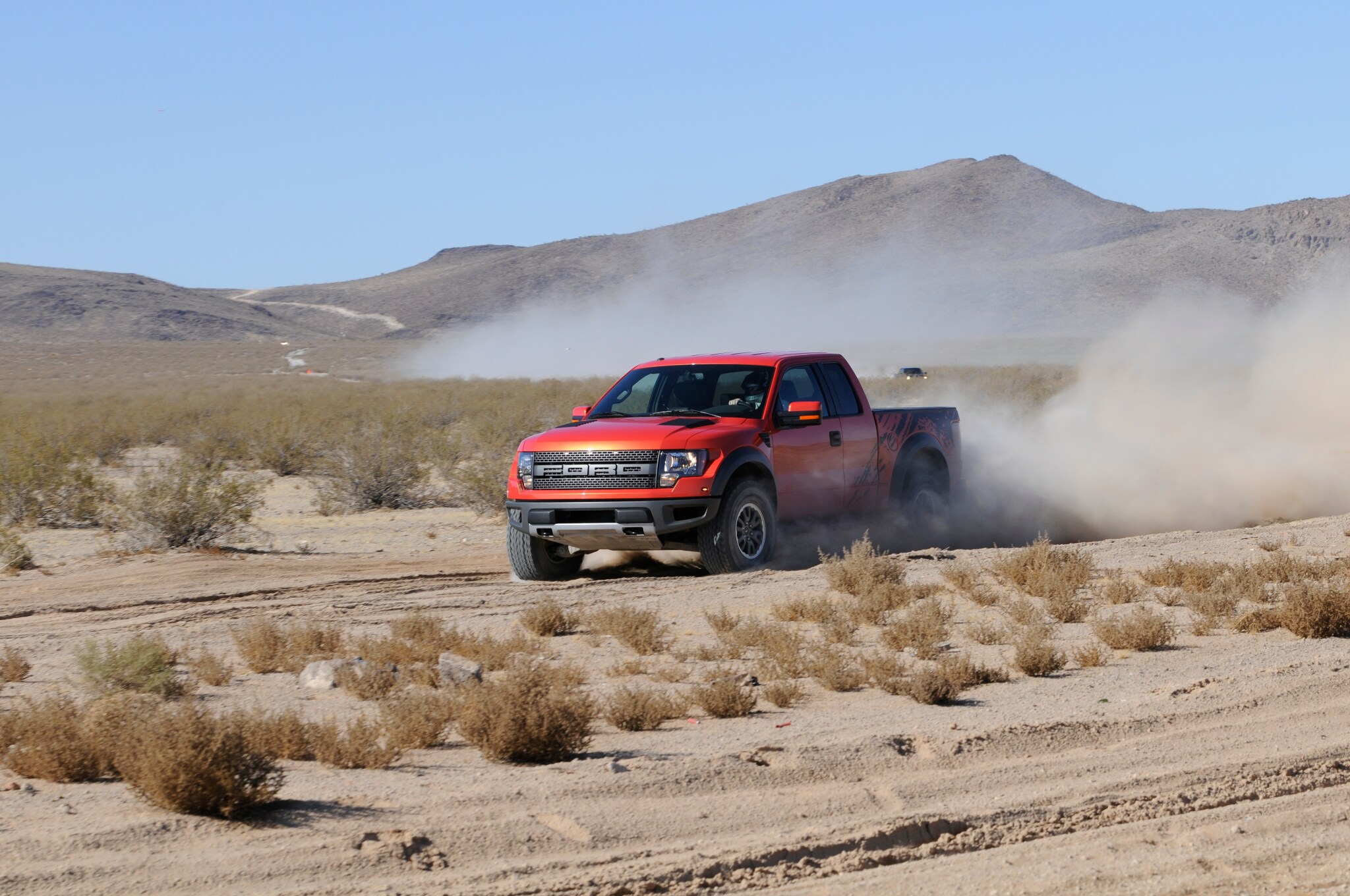
The Ford F-150 Raptor has become one of the most recognizable names in off-road performance, but its beginnings were anything but easy. In 2008, Ford engineers faced a potentially disastrous setback just hours before the Baja 1000, one of the world's most demanding off-road races. The experimental F-150 SVT Raptor-R developed engine problems during final preparations, threatening to derail months of work before the truck even reached the starting line.
What was supposed to be a routine evening of adjustments turned into an overnight repair effort. Engineers worked tirelessly to diagnose the malfunction, eventually discovering that replacing the engine wiring harness was the solution. At approximately 7:30 a.m., the engine finally started, leaving just five hours before the race. The experience demonstrated the determination and problem-solving mentality that would ultimately define the Raptor program.
Redefining What a Performance Truck Could Be
During the mid-2000s, automotive performance largely centered on horsepower, acceleration, and handling on paved roads. Ford's Special Vehicle Team had already established its reputation through vehicles like the Mustang Cobra and Ford GT. However, a small group of engineers recognized an opportunity to explore an entirely different approach to performance.
Inspired by specialized desert racing trucks, the team envisioned a production pickup capable of navigating rugged terrain at impressive speeds. These racing machines featured advanced suspension systems designed to absorb massive impacts while maintaining control over unpredictable surfaces.
Unfortunately, vehicles offering those capabilities were typically expensive, highly specialized, and inaccessible to everyday consumers. Ford wanted to change that by creating a factory-built pickup that combined genuine off-road performance with the practicality of a production vehicle. The project eventually adopted the name Raptor, originally an internal code name that gained popularity among enthusiasts.
Putting the Raptor Through Extreme Testing
Developing a truck capable of handling demanding desert environments required a different approach to durability testing. Ford engineers established a 62-mile testing course near Borrego Springs, California, where an early prototype equipped with a developing 6.2-liter V8 completed approximately 1,300 miles. Although the prototype performed well, engineers understood that controlled testing couldn't fully reproduce the unpredictable challenges of competitive desert racing. The Baja 1000 offered an opportunity to evaluate the truck under extreme conditions, including deep sand, rocky trails, punishing impacts, and sustained mechanical stress.
Rather than treating racing as a promotional opportunity alone, Ford approached the competition as an essential engineering exercise. The objective was to identify weaknesses, gather valuable performance data, and improve the production vehicle before customers experienced those challenges themselves.
Building a Race Truck Against the Clock
Preparing the Raptor-R for the 2008 Baja 1000 introduced another major obstacle: time. Ford approached experienced off-road racer Greg Foutz and his Foutz Motorsports organization with approximately three months to build, develop, and prepare the truck for competition. The project required coordination between multiple racing organizations while engineers continued developing components for a vehicle that had not yet entered production. Replacement parts were particularly difficult to obtain because many components existed only as prototypes.
Despite these limitations, the team remained focused on building a race truck that closely represented the production Raptor. Rather than creating a completely specialized racing machine, engineers retained important F-150 components, including its fully boxed frame, production-based drivetrain, transmission, brakes, and axles.
The Raptor-R also featured a specially calibrated 6.2-liter V8 producing approximately 500 horsepower, upgraded suspension capabilities, specialized FOX dampers, and additional racing safety equipment. This production-based approach allowed engineers to gather information directly relevant to the trucks customers would eventually purchase. Because the Raptor was not yet a production model, the team entered Class 8, competing against more extensively modified full-size trucks.
Establishing a Legacy of Off-Road Innovation
The Raptor's difficult journey to the Baja 1000 starting line demonstrated Ford's commitment to developing vehicles through demanding real-world testing. Every mechanical setback presented another opportunity to identify weaknesses and refine the engineering behind the truck. That philosophy helped establish the foundation for the Raptor's reputation as a purpose-built off-road performance vehicle. What began as an ambitious experiment eventually helped redefine expectations for factory-built performance pickups, proving that capability beyond paved roads could be just as important as traditional performance measurements.
The origins of the Ford Raptor highlight the engineering, determination, and innovation behind Ford's performance truck lineup. For drivers interested in experiencing Ford's combination of power, capability, and adventurous design, Brian Hoskins Ford in Coatesville, PA, is a great place to begin. Whether you're exploring the F-150 Raptor or another Ford truck, the dealership can help you learn more about available models, features, and configurations. Visit Brian Hoskins Ford online to browse our selection and discuss your next Ford vehicle.
Categories:
Fleet